Village of Campagnano
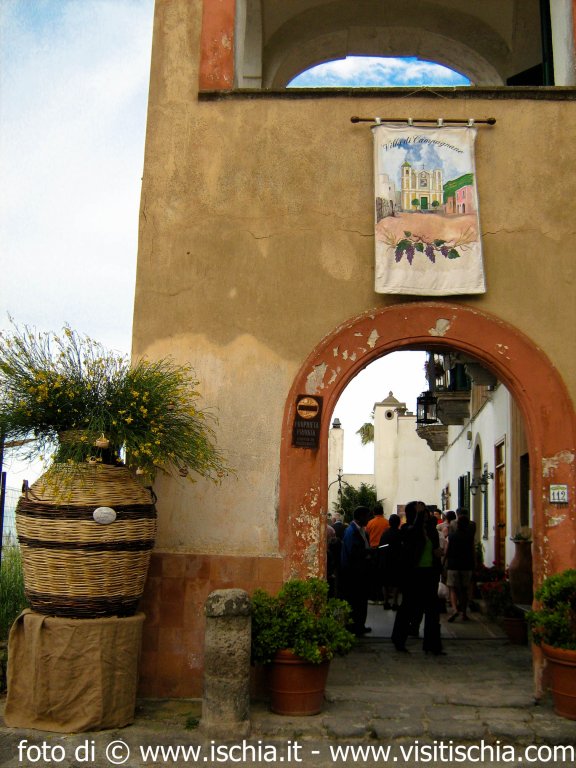
Campagnano was populated during the Neolithic Age. It is assumed that the Hill of Campagnano was repopulated after the eruption of Mount Trippodi in 1201-1205, when the survivors found a safe place. Subsequently, the village was the scene of an important historical event: "The Battle of Campagnano", fought between Ferdinand I and Giovanni d’Angiò. The troops were commanded by Giovanni Tortiglia while those of Ferdinand I by Admiral Poo. The year was 1464, when, going down Epomeo with his troops, Admiral Poo, clashed with men of Tortilla in Campanano. The battle was fierce and many died. The three troops were scattered in the hills of the countryside and the village of Celsa (Ischia Ponte).
The ancient islanders called the place "Campaniae similis", similar to the ancient plains of Campania, then "Campanianuse", from which derives the name Campagnano.
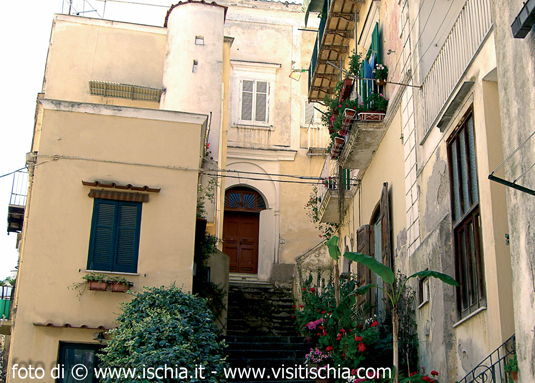
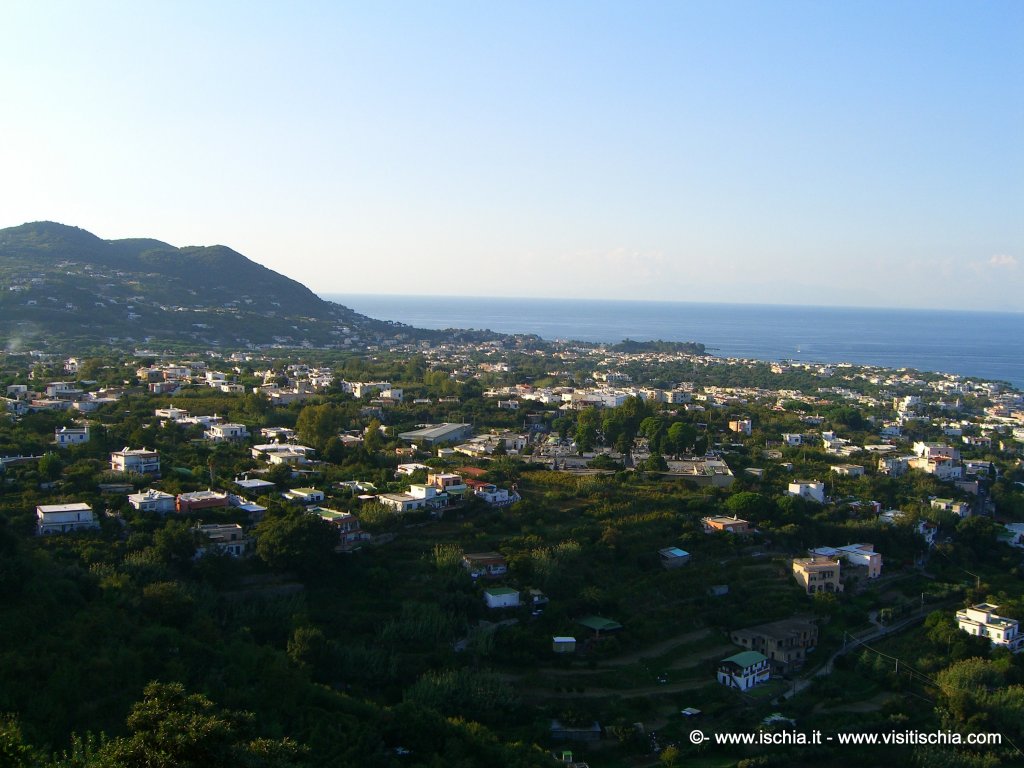
On the other hand, Campagnano, that was once a small village, adorned with beautiful buildings and houses of wealthy landowners, has now become part of the municipality of Ischia of considerable proportions and surrounded by many luxury villas. It represents the desire of many people to live in a place where it is possible to breathe the mountain and sea air.
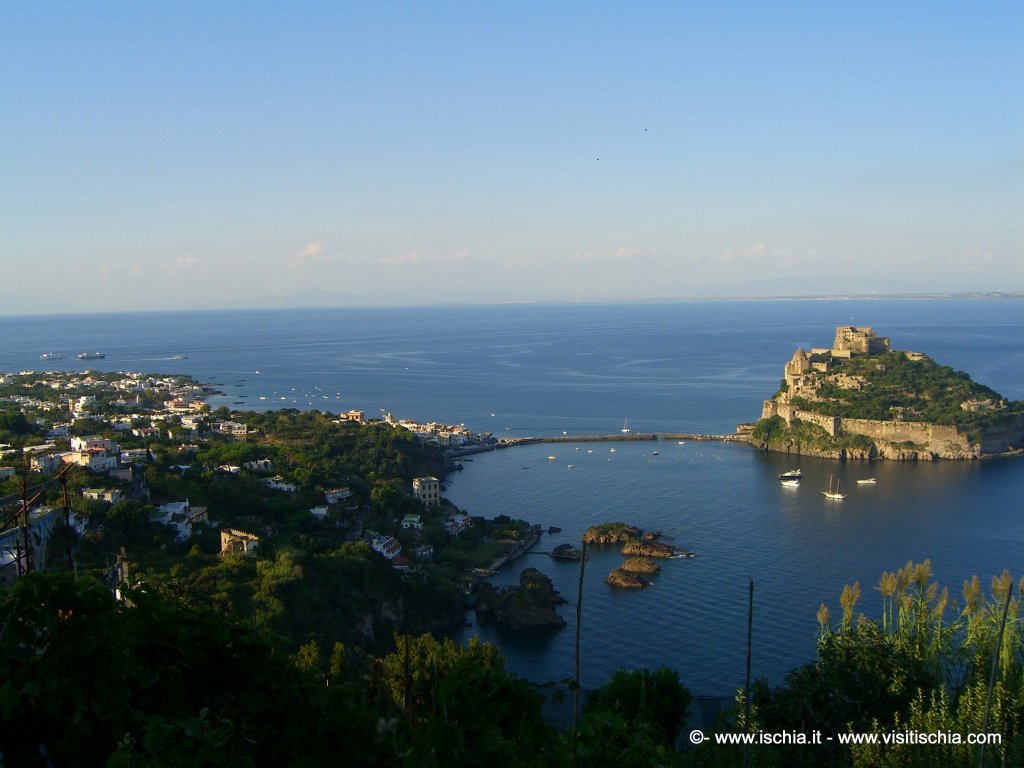
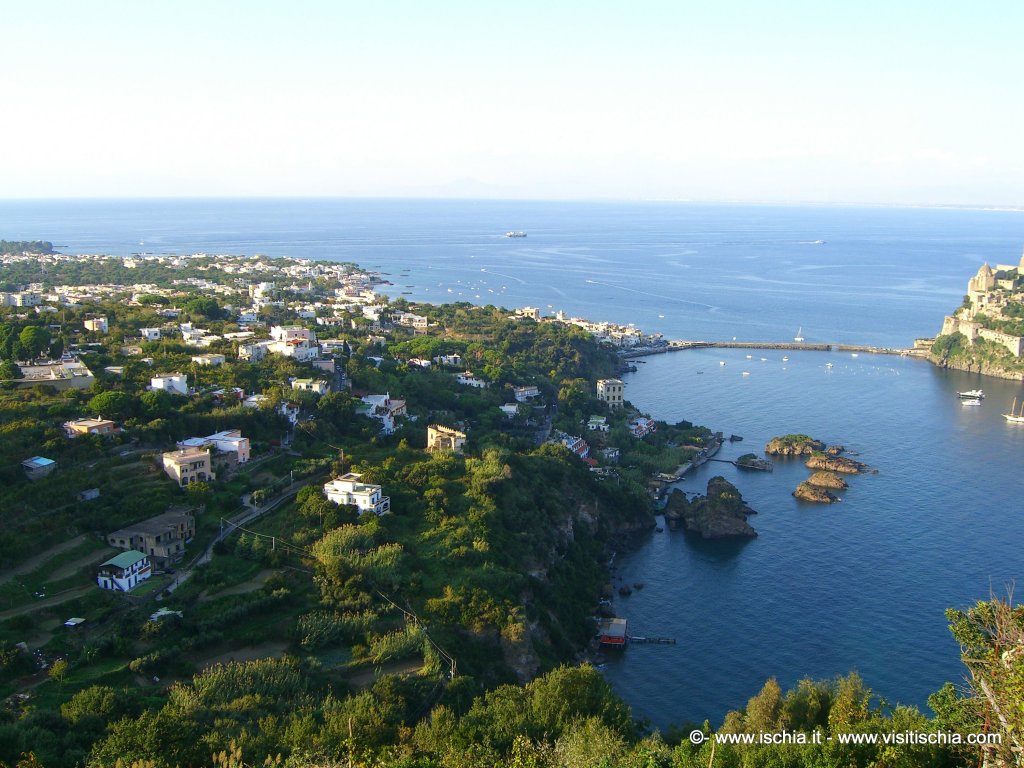
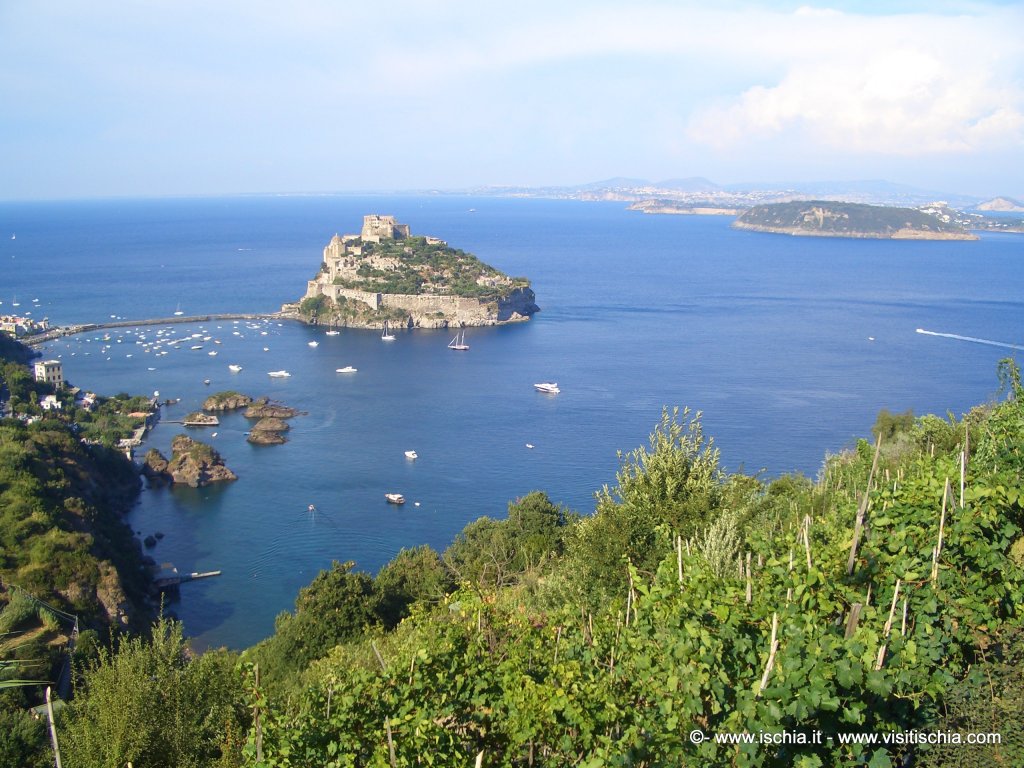
Leaving the church, turn left on the fields, after about 500 meters., we arrive at a place called ‘fuori al Rarone’. From here you can enjoy one of the most beautiful views of the island, one piece at the bottom of the Aragonese Castle, the Tower of Michelangelo or of Guevara, the rocks of Sant'Anna, the Cartaromana bay, and left on the bottom, the Gulf of Gaeta, in the center the charming Gulf of Naples and Mount Vesuvius and the islands of Procida and Vivara. From Rarone, so called because of the presence of huge steps that characterize the road, leaving the way Campagnano and going right after a walk of about 15 minutes you come to the Towers of Campagnano, another charming village remained intact. After a short visit in the lovely town, one returns to the Rarone, 'where, going towards Campagnano, you arrive in a square where an old building found the so-called Palazzo Quartaruolo . It is accessed through a portal in local stone and has a large courtyard with a central reservoir that collects the rain's still building, once only water supply for the families who lived there. The structure was built in the XV111 century by the family Mazzella. Also, other families realized manor houses outside the center. No coincidence that the most significant are those developed in the relevance of including the town of Ischia is worth mentioning, in addition to that building, the Villa Cilento made at the end of '600, as the bishop's residence, at that time, still dwelling on the Castle Mazzella and House and then home to raise Curci made by the lords of the Borgo of Celsa, or as holiday homes or farmhouses.
Returning to the Square of Campagnano, after the crossing, you'll find on the left, a cross erected by the local people in 1953 in memory of the mission of P. P. Passionist. From here starts Via Cà Mormile, paved road and almost entirely uphill, which leads mainly plan Liguori, another ancient town of indescribable beauty, remained intact in turn over time and not coincidentally, only recently, served the public aqueduct . Walking through the streets of the village you can feel smells and tastes of a time that further enhance the amenity of the place. Going on the ecological reach the ruins of an ancient church dedicated to St. Pancras placed on the sea, where the faithful every year on May 12 to participate in a religious celebration with folk overtones. Passing through the woods of chestnut, oak and Mediterranean scrub you can get up to Mount Vezzi, where, besides enjoying unsurpassed views, a fine air you can breathe.
Info
City Hall of Ischia
CAP: 80077
Area: 805 hectares
Inhabitants: 18253
City Hall: tel 081 3333111
Bus lines: CS - CD - 1 - 2 - 7 - 8 - 15 - C12 - C13 - 3 - 5 - 6


Near to
Hotel Capannina
Hotel Rist. Il Torchio
Porto di Ischia
Acquedotto dei Pilastri
Parr. Sant' Antonio Abate
S. Maria del Carmine
San Domenico
Parr. di San Domenico
Baia di Cartaromana
Nascondiglio dell' Amore
Rist. La Capannina
Rist. Barracuda
Rist. Il Torchio
Farm. Dr.ssa Costabile
Ceramiche Artistiche