Visit Ischia

Italian - ItalyEnglish (United Kingdom)
You are here: Home

Parish of St. Francis Xavier

email print

Description

The parish of St. Francis Xavier was once a church dedicated to Our Lady of Grace and only later was dedicated to St. Francis Xavier. The building stands above the road and is accessed via a double staircase leading to the outdoor courtyard and then to the churchyard. It has a Renaissance portal in stone green and a kiosk with two arches for the bells. The simple façade is framed in green tuff stone. The interior has a nave with a barrel vault, while the apse has a vault. All inside are: Alfonso Di Spigna Altarpiece of 1741 “S. Francis Xavier and St. Ignatius of Loyola in front of the Madonna delle Grazie”, canvas “Deposition from the Cross” of the forian painter Gennaro Migliaccio (1766), and the statue of St. Francis Xavier, recently painted with “S Vito Martire” of the Florentine forian painter.
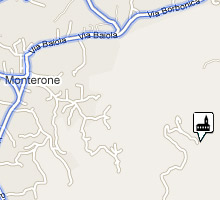
Mappa della Parrocchia S. Francesco Saverio

Info

Address: State road loc. Cuotto
City Hall: 80075 - Forio
Foundation age: XVIII sec.
Datazione: 1742
Holy Masses hours: sun 9:30 - 11:00 in the evening at 18:00 (in summer at 19:00). Working day at 18,00 (in summer at 19,00)
Priest: Don Pasquale Mattera
Bus lines: 1 - 9 - CD - CS

Objets d'art


Canvas

  • Madonna delle Grazie con S. Francesco Saverio e S. Gaetano by Di Spigna Alfonso
  • Pietà by Gennaro Migliaccio


fotogalleryvideogallery

Parish of St. Michele

email print

Description

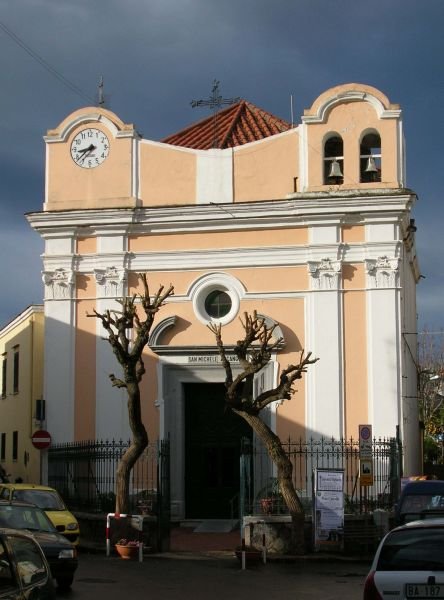
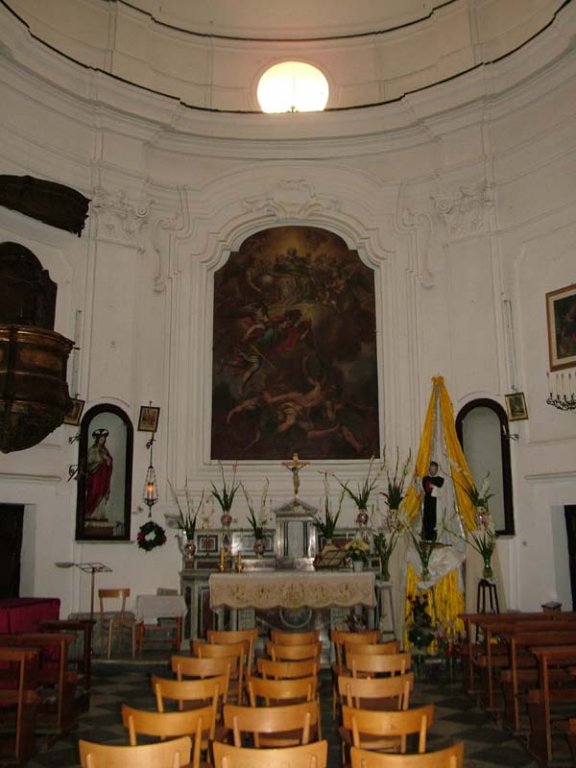
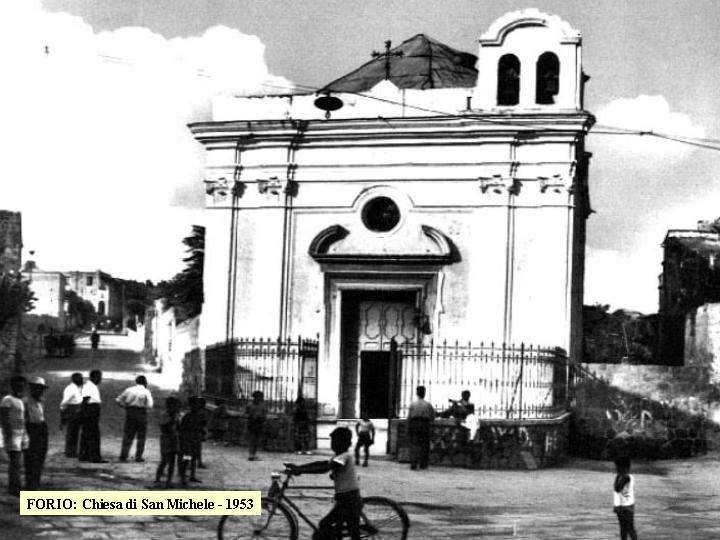
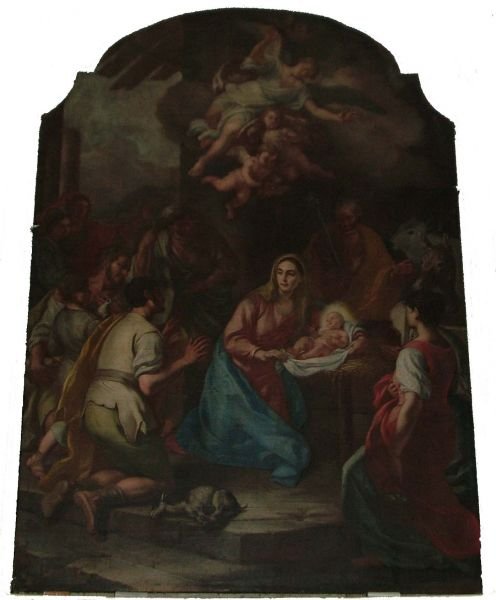
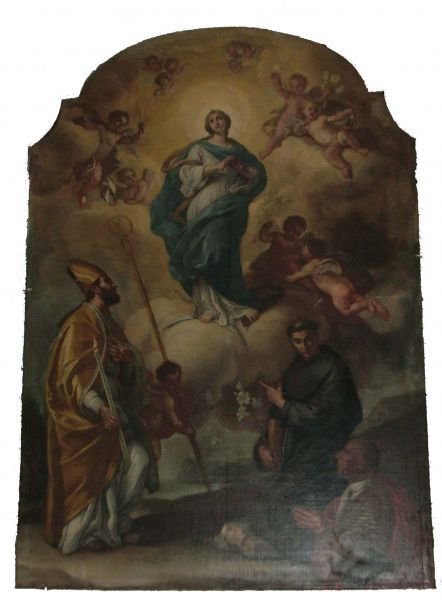
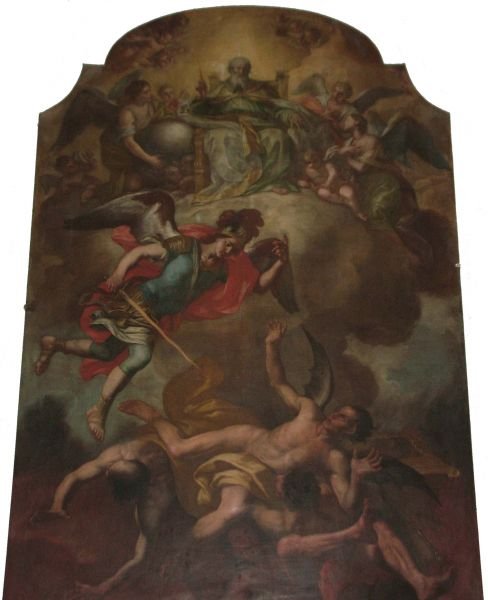
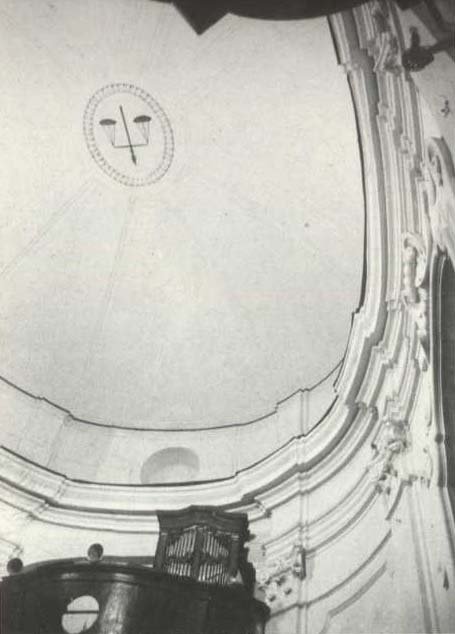
Overlooking the small Piazza SS. Immaculata, the church, also known as S. Michele al Cerriglio, is preceded by a courtyard enclosed by a railing. The facade is decorated with pairs of pilasters at the two side towers and is bounded by a projecting cornice. The movement, in the central area of convex, concave on both sides of you. From the main front is not unusual plant perceives the ellipsoidal peculiarities of the small church, while inside the pillars, embedded in the walls, mark the division to eight segments of the ellipsoidal shell. The dome on the outside with clay roofing tiles, resting on a drum pierced by oculi. Inside, stucco sinuous grace the canvases placed on the three altars, a fine 1700 wooden pulpit from the convex form. The stone walls of the church is in tuff and lava stone. The artwork in the church are three paintings of a Spigna "S. Michele drives the rebel angels from heaven”, “The Nativity”, “Immaculate” paintings of the eighteenth century, the picture of S. Michael the Archangel, wooden statues of St. Anthony of Padua, Our Lady of Sorrows, Christ Blessing, S. Antonio, and a small pipe organ and the choir of the eighteenth century ..

Historical Info

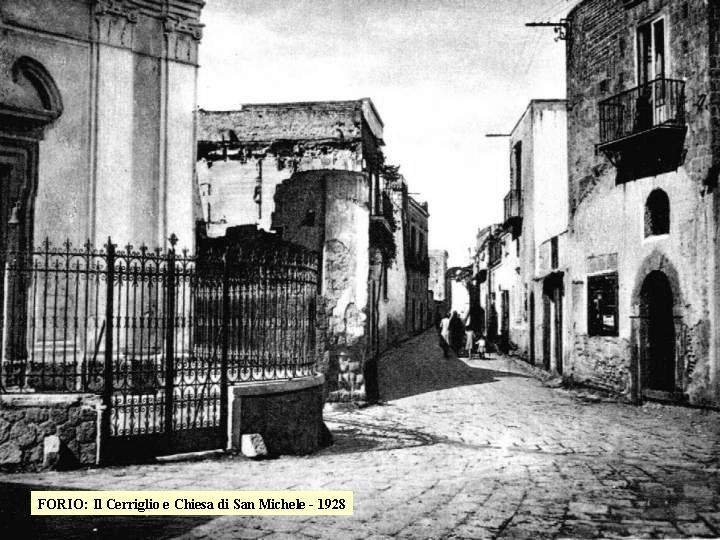
The founder of the church was Erasmo Castaldi, said Zotta, who built it in 1748. The heirs retained the patronage until 1936, when it became a parish. A flood in 1910 wreaked serious structural damage to the building, without damaging the paintings and other art objects stored inside (the precious altarpieces Alfonso Di Spigna, the wooden pulpit and furnishings major ). During the reconstruction work, financed by contributions of the faithful, the priest Pietro Calise had to add a clock on the left side, to create symmetry with the opposite side of the tower. A plaque dated 1919 on the left side of the entrance recalls the event of flooding and the repair and renewal desired by the priest.
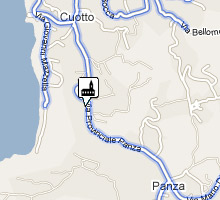
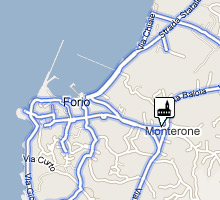
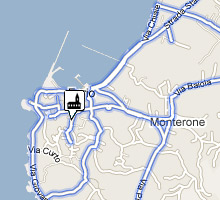
Mappa della Parrocchia di San Michele

Info

Address: Via SS.Immacolata
City Hall: 80075 - Forio
Century Foundation: XVIII cent.
Date: 1748
Opening Masses: sun 7:00 – 11:15
Priest: Don Pasquale Sferratore
Bus lines: 14 - 2 - 9 -CD -CS

Objets d'art


Toiles

  • Immacolata con santi e donatore by Di Spigna Alfonso
  • S. Michele abbatte Lucifero by Di Spigna Alfonso
  • Adorazione dei pastori by Di Spigna Alfonso
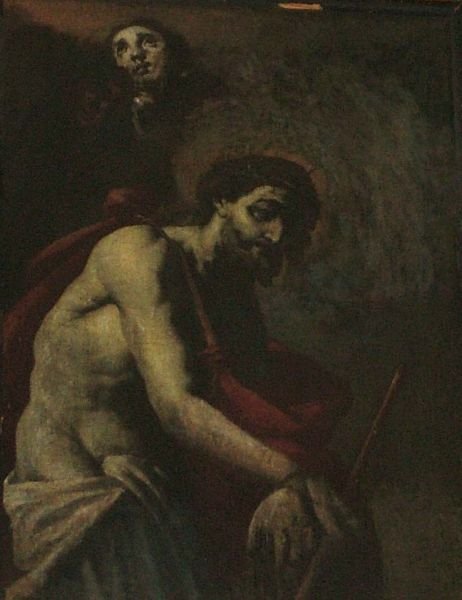
  • Ecce homo e S. Antonio Abate unknown author
fotogalleryvideogallery

Church of San Domenico

email print

Description

PLittle Church of simple architecture, built in a rural area, now quite densely populated, the church of S. Dominico can be reached through narrow winding streets. Its origins are rustic exposed by small size and simple architecture. The only special feature is the top of the front, tapering upwards through some steps, which is why it is taken up above the door. Only the main facade is plastered and painted with pink and white colours, while the rest of the building has brick walls of tufa stone, which are derived in some niches. The interior is extremely simple, has an altar on which is placed a painting of St. Dominic in 1938 by Giacomo Genovino of Forio.

Historical-critical news

Built in the mid-eighteenth century, the church was under the patronage of the Amalfitano family. The report of the pastoral visit of 1886 can be deduced that due to the damage caused by the earthquake of 1883 the church was restored and covered, but it was still unfinished. In the early twentieth century, it was completely restored by the priest Giovan Crisostomo Verde. In the early seventies, the church was closed for worship and in a complete state of abandonment, to the 1975 restoration was begun on the initiative of some local residents.
Mappa della Chiesa di San Domenico

Info

Address: Via Bocca
City Hall: 80075 - Forio
Period of foundation: XVIII cent.
Holy Masses hours: ---
Priest: Mons. Giuseppe Regine
Bus lines: 1 - 14 - 2 - 9 - CD - CS

Objets d'art

Madonna delle Grazie con S. Francesco Saverio e S. Gaetano, Pietà.

fotogalleryvideogallery

Santa Maria al Monte

email print

Description

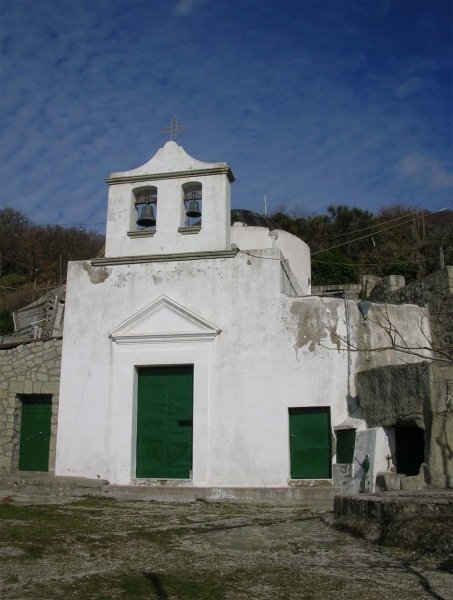
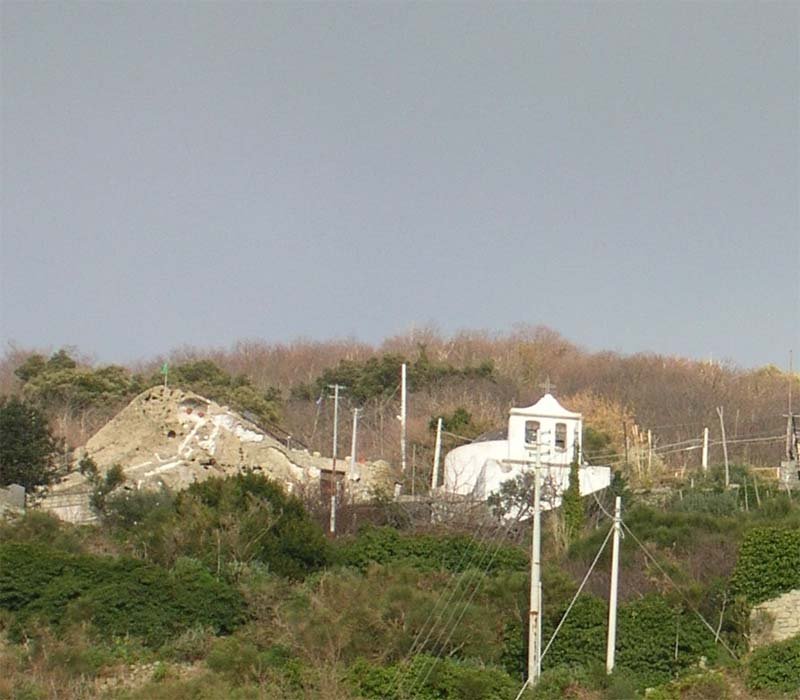
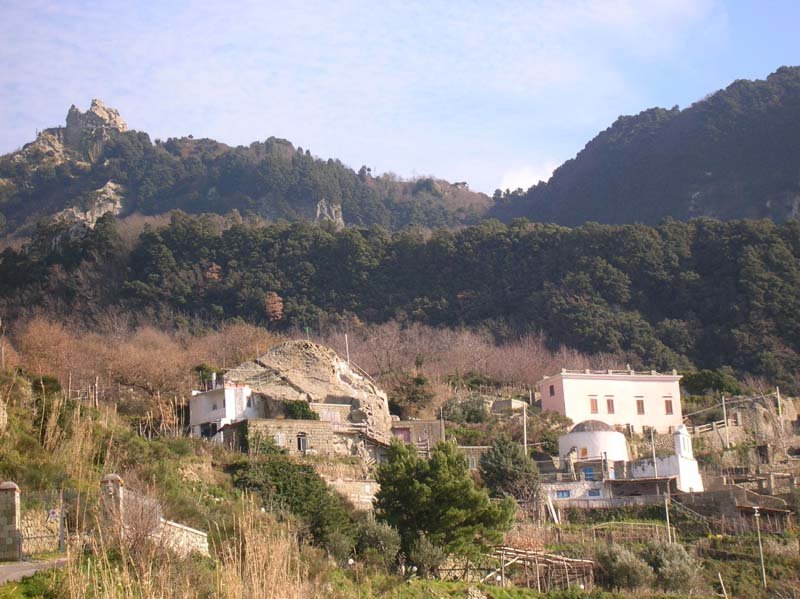
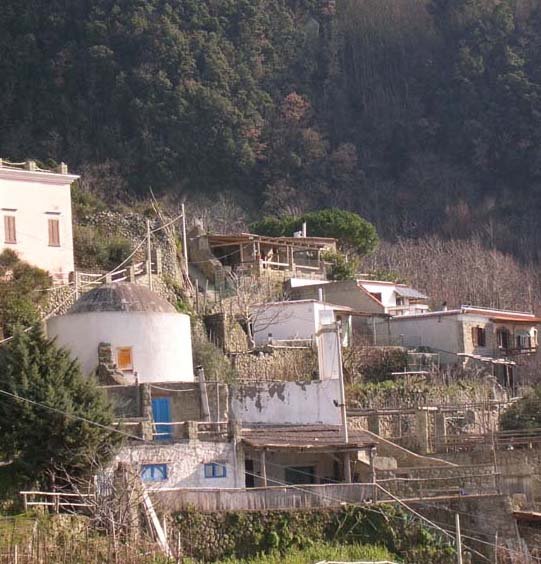
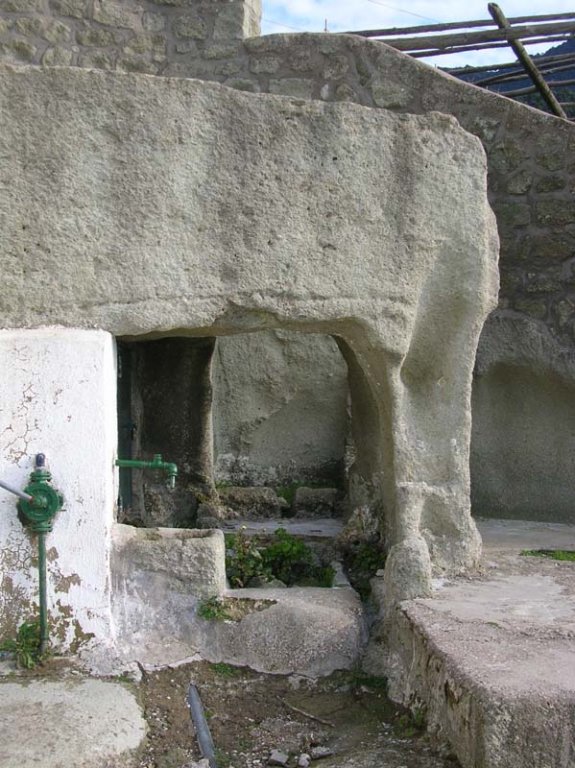
The church, located over 400 meters above sea level, is located in a natural setting of great charm and beauty, between forests, hiking trails, terraces and stone houses, ancient shelters for shepherds and farmers. Partially excavated in the tufa rock, this "church of stone" can be considered a typical example of mountain architecture. The building structure is very simple. The large courtyard in front of the stone benches, and presents an enormous cistern dug in the tuff for collecting rainwater. The facade is very simple simple, is topped by a rectangular structure with two bells and a spherical dome. The interior has a large central nave ending in the apse, flanked on the right side by a narrow aisle. In addition to the altarpiece depicting the Madonna with the anonymous saints Anthony Abbot and Paul the Hermit, the church has a wooden altar frontal with painted floral motifs, from the early seventeenth century, and residues of frescoes of the seventeenth century …

Hitorical info

In his work, D’Ascia (1867) reports the news that the church was built in 1596 by Sebastian Sportiello to atone for a murder. Sportiello belonged to the family who was also the foundation of the church of S. Charles, another example of rural architecture in the front that reveals an affinity with the church of S. Maria al Monte. Based on the testimony of some descendants of the family, D’Ascia said that the three Sportiello brothers (Sebastiano, Vito Nicola and Andrea), rich landowners in Salerno, escaped to Forio after killing the bishop of their city, for penance, they were forced to build two churches at less distance from each other. D'Arbitrio e Ziviello (1982) speculate that the church was built by local people when agriculture and then spread to rural settlements in the mountainous areas. The church, built in a strategic position, became a reference point for the farming communities settled in those areas, meeting their religious needs, and social practices. S. Maria al Monte was considered as place of worship designed to preserve the traditions of the religious population, but also a meeting point, meeting and gathering in case of danger. The church was abandoned around 1930 and used as a shelter for animals and storage of wood until, for the initiative of a former Monaco of the S. Nicholas Hermitage on Epomeo, thanks to the donations collected from the faithful Forian people, was reopened and restored. There was a great opening party and since then St. Maria del Monte has become a place of pilgrimage for the holiday celebrated every year on September 12, in which is carried in procession a statue of the Madonna. A legend in the oral tradition recorded in Forio in 1990 (Vuoso, 2002, pp. 84-85) associates the church to the pirate raids which plagued the island between the sixteenth and the eighteenth century: a Forian fisherman was driven by a storm in Turkey where he was captured by the Turks, that known by the fisherman who Forio had no fortresses and defensive structures, organized an assault. When they came caught sight of the island, they saw a queen on top of the hill with hundreds of armed soldiers and torches. Frightened, the Pirates stopped and brutally killed the fisherman, believed he had lied. In memory of this event, the Forian inhabitants ordered a picture for the altar of the church. Next to the seventeenth-century, there is a small church, now converted into a dwelling.
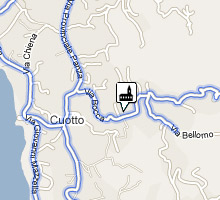
Mappa della Chiesa Santa Maria al Monte

Info

Address: Via Bocca
City hall: 80075 - Forio
Time of building: XVI - XVII sec.
Hour of Holy Masses: ---
Priest: Don Pasquale Sferratore
Bus lines: 1 - 14 - 2 - 9 - CD - CS

fotogalleryvideogallery

Parish of San Sebastian

email print

Description

The church of St. Anthony, also known as Church of St. Sebastian, grows mainly in height, to compensate for the confined space of the winding alleys of the medieval Forio where it stands. It stands in the narrow road that it took its name for the height and the neo-classical facade in soft pink. The table has two rows of pilasters divided by stringcourses. Upstairs Ionic pilasters framing three scores, in the central one opens a window, at which rises above the triangular pediment that crowns the facade and the entrance portal at the bottom. On the left side there is the pointed bell tower, set back of the facade. The building has a central plan of a Greek cross with Corinthian pillars and a large dome decorated with sunken panels. The masonry is of tufa stone.

Historical Info

D’Ascia (1867) writes that Giacinto Colantonio, following a vow made, bought in 1321 for 60 ducats a fund in the district "Tuocco" and built a chapel dedicated to "SS. Name of Mary and St. Anthony". After the disastrous eruption of the Arso in 1301, across the island were built many churches consecrated to the saint, protector against fire. Di Lustro (1971), according to some historical documents of the historical administration archives of the University of Forio, has formulated a new hypothesis on the foundation of the church that dates back to the eighteenth century and was founded not in 1321 as reported by D’Ascia, but between 1700 and 1710. A son of the founder, Vito Colantonio, it is still alive in 1777 and expects the sale of his rights by the University of the church, as shown by the records of a public parliament on January 14 of that year. Already in 1770 the parish was transferred to this church, four years before the date reported by D’Ascia. The building has undergone several operations during the nineteenth century. In 1825, the small original structure was enlarged and furnished at the expense of the City, assuming its present size, the renovation and landscaping was completed in 1850. In 1883 he was again restored to repair damage caused by the earthquake. D’Ascia finds another explanation of the other name of the church: S. Sebastiano. In 1750, during the extension work of the parish of St. Sebastiano, which no longer exists, the priest was transferred to St. Maria di Loreto, following the suspension of construction of the temple, in 1770 (1774 according to D'Ascia) the priest came to St. Anthony has since became the parish church of St. Sebastiano.

Page 12 of 16

Il nostro sito Web utilizza i cookie. Utilizzando il nostro sito e accettando le condizioni della presente informativa, si acconsente all'utilizzo dei cookie in conformità ai termini e alle condizioni dell’informativa stessa. Per saperne di più sui cookie, visualizza la Privacy.

Accetto i cookie da questo sito.